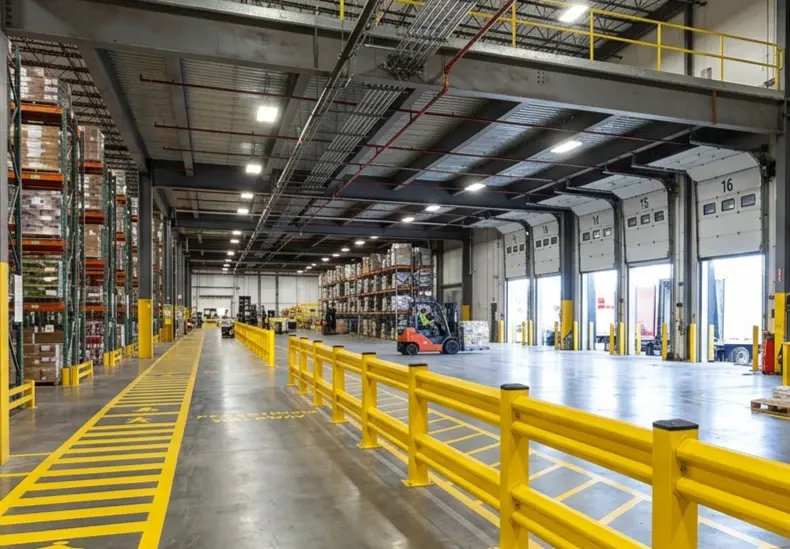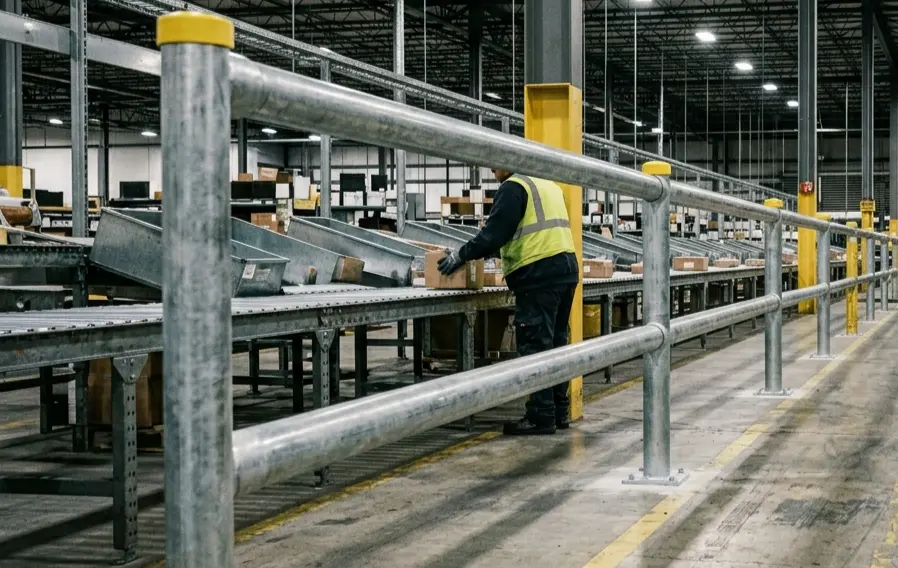
In the outbound sort area of an active facility, a forklift traffic lane and pedestrian lane converged too closely, producing several close calls and daily exposure to potential struck-by incidents. ABDM Facilities Maintenance Supervisor Brandon Simpson addressed the hazard directly by installing safety railing, establishing a designated pedestrian walkway, and placing safety signage to physically separate the two traffic flows.
Challenge
- The outbound sort area had only recently been brought into active use, and pedestrian routing had not yet been formally established.
- The forklift traffic lane and pedestrian lane in the new area ran too close together in one section, with no physical separation between them.
- Several close calls had occurred, with employees at risk of being struck by forklift traffic on a daily basis.
Actions Taken
- Installed safety railing to physically separate the forklift traffic lane from the pedestrian zone.
- Placed safety signage to reinforce correct pedestrian routing and increase awareness of the forklift traffic lane.
- Sourced the majority of required materials from existing in-house inventory, keeping external costs to approximately $1,000.
- Completed the full installation in approximately three hours.
Outcome
- Daily close-call exposure between pedestrians and forklift traffic was eliminated following installation.
- Pedestrians are now physically directed to follow the designated safe route, removing reliance on signage or behavioral compliance alone.
Precision in Action. Assurance in Every Step.
ABDM finished a low-cost, high-consequence work that protects facilities from preventable injury and operational disruption. By addressing a physical separation gap before an incident occurred, the team established a compliant, safe pedestrian infrastructure in a newly activated operational zone before the risk could escalate further.